

Air fryers have taken oven kitchen countertops across the UK, promising the crunch of deep-fried food without the guilt. But are they actually a healthier way to cook, or just clever marketing? Here's a look at what the research says.
How Air Fryers Actually Work
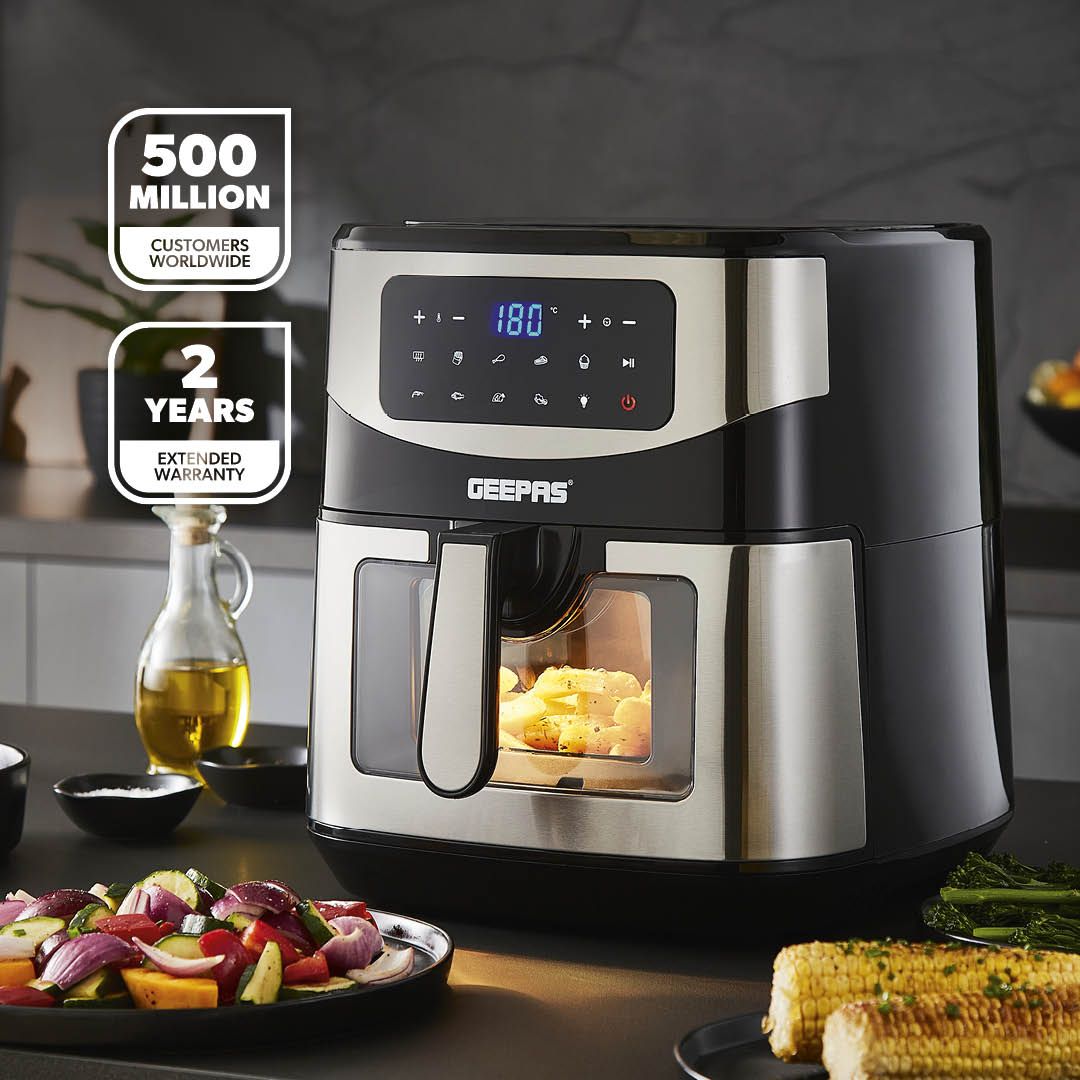
Despite the name, an air fryer doesn't actually "fry" anything in the traditional sense. It's essentially a compact convection oven: a fan circulates very hot air rapidly around the food, crisping the outside while keeping the inside moist. This is quite different from deep frying, which submerges food in hot oil to achieve a similar crispy texture.
The Case For Air Fryers
Less oil, fewer calories. The most obvious benefit is oil reduction. Air frying typically requires only around a tablespoon of oil, and can cut the calories you'd get from deep frying by as much as 80%. Studies comparing the two methods have found that deep-fried chips can retain around ten times more oil than the air-fried equivalent cooked for the same length of time.
Lower fat, better for weight management. Because they use so little oil, air-fried foods generally end up lower in fat and calories than their deep-fried counterparts. This can make air fryers a useful tool if you're trying to manage your weight or reduce your overall fat intake, since air-fried food tends to be lower in fat and calories than traditionally fried food.
Nutrient retention. There's also some evidence that the quick cooking time of an air fryer helps hold onto more of a food's natural nutrients compared with other high-heat methods, though a degree of nutrient loss is still expected with any cooking process at high temperatures.
The Catch: Acrylamide
Here's where it gets more nuanced. Whenever starchy, carbohydrate-rich foods like potatoes, chips, or bread are cooked at high temperatures, they can form a chemical compound called acrylamide.
Acrylamide forms when foods are heated above roughly 120°C, and it's one of the chemical hazards linked to the heat treatment of starchy foods like potatoes. It's classified by healthy authorities as a probable human carcinogen based on animal studies, through the real-world cancer risk from dietary levels in humans is still being researched.
The good news is that air frying appears to produce meaningfully less acrylamide than deep frying. One widely cited study found that air frying reduced acrylamide in fried potatoes by around 90% compared with traditional frying, and separate research has found reductions in the range of 75 to 90% versus deep-fat frying. That's a substantial drop, though it's worth noting that some acrylamide is still present in air-fried food, it isn't eliminated entirely.
So, Are Air Fryers Healthy?
The honest answer is: it depends on what you put in them. As one US dietary puts it, air frying can be a healthy way to cook, but the fact that something has been air-fried doesn't automatically make it a healthy food. Air-frying a bag of frozen chips is still, nutritionally, a bag of chips - just one with noticeably less oil and fat than if you'd deep-fried it.
Where air fryers genuinely shine is as a lower-fat alternative to deep frying and oven roasting with lots of added oil. If you're regularly cooking chips, wedges, chicken, or vegetables and want to cut down on saturated fat and calories without sacrificing that crispy texture, an air fryer is a solid upgrade over the deep-fat fryer.
Tips To Make Air Frying Even Healthier
- Soak starchy vegetables first. Soaking pre-cut potatoes, squash, and other root vegetables in filtered water for at least 15 minutes before cooking has been shown to help reduce acrylamide formation.
- Don't overcook. Avoiding overcooked or overly browned food helps limit acrylamide exposure, since longer cooking times at high heat increase formation.
- Balance your cooking methods. Boiling and steaming don't generally produce acrylamide, so mixing air frying with other cooking methods across the week helps keep overall exposure down.
- Focus on whole foods. Use your air fryer for vegetables, lean proteins, and homemade dishes rather than relying on it purely for reheating processed, breaded, or ultra-processed foods.
- Watch the oil you do use. Since air fryers need so little oil, it's an easy opportunity to upgrade to a higher-quality option like olive or avocado oil rather than defaulting to cheaper, more processed oils.
The Bottom Line
Air fryers aren't a magic health appliance, but they're a genuine improvement over deep frying when it comes to fat, calories, and acrylamide levels. Used thoughtfully - with a variety of whole foods, sensible cooking times, and not excessively for chips and processed snacks - an air fryer can absolutely be part of a healthy kitchen setup.
This article is for general information only. If you have specific health or dietary concerns, it's worth speaking with a registered dietitian or your GP.
16 comments
Riley Olivia
I and my husband have been married for 22 years and for quite a long time now we have been living as strangers due to some marital issues and his inability to stand out to make things right. Unknown to me, there was some other lady in the picture who has been so daring and doing everything possible to ruin my marriage so she can fully take my place. i sought for help within my reach and nothing worked so i had to contact Dr osazuwa spell caster who inturn was so helpful and showed me how swift he tends to resolve marital issues for couples. He revealed to me all that happened between my husband and the said and he did everything possible with his powers and got them separated. My husband is fully back home to me and our girls and it gladdens my heart so much. Dr osazuwa spell caster is trustworthy enough to deliver whenever you call on him for his help to fix your problems.
CONTACT SPIRITUAL HIGH CHIF PAPA OSAZUWA FOR HELP TO SOLVE YOUR RELATIONSHIP OR MARRIAGE ISSUES
via WhatsApp : +2347031497107
Email: drosazuwaspell@gmail.com
I and my husband have been married for 22 years and for quite a long time now we have been living as strangers due to some marital issues and his inability to stand out to make things right. Unknown to me, there was some other lady in the picture who has been so daring and doing everything possible to ruin my marriage so she can fully take my place. i sought for help within my reach and nothing worked so i had to contact Dr osazuwa spell caster who inturn was so helpful and showed me how swift he tends to resolve marital issues for couples. He revealed to me all that happened between my husband and the said and he did everything possible with his powers and got them separated. My husband is fully back home to me and our girls and it gladdens my heart so much. Dr osazuwa spell caster is trustworthy enough to deliver whenever you call on him for his help to fix your problems.
CONTACT SPIRITUAL HIGH CHIF PAPA OSAZUWA FOR HELP TO SOLVE YOUR RELATIONSHIP OR MARRIAGE ISSUES
via WhatsApp : +2347031497107
Email: drosazuwaspell@gmail.com
Shane Missler
If you or someone you know has fallen victim to a crypt0currency scam, I highly recommend reaching out to Brunoe Quick Hack. Their services are a beacon of hope for those who have lost their hard-earned money to fraudulent activities. With their help, you can recover your lost crypt0currency and regain control of your financial well-being. I’m grateful for their assistance in my time of need. In conclusion, I would like to extend my gratitude to Brunoe Quick Hack for their exceptional service and expertise in rec0vering my lost crypt0currency. Their professionalism, efficiency, and dedication to their craft are a testament to their commitment to helping victims of crypt0currency scams. having lost a significant amount of crypt0currency to scammers. The experience was not only financially devastating but also emotionally taxing. lost accounts.
Gain access to your wife’s, girlfriend’s, husband’s, or boyfriend’s social media accounts.
Recover funds lost to scams, through bank transfers and crypt0currencies such as BTC, USDT, and ETH. .
Recover your social media lost accounts.
Contact: Email>>> BrunoeQuickHack(AT)gmail.COM
WhatsApp at:: +170-578 (42-635)
If you or someone you know has fallen victim to a crypt0currency scam, I highly recommend reaching out to Brunoe Quick Hack. Their services are a beacon of hope for those who have lost their hard-earned money to fraudulent activities. With their help, you can recover your lost crypt0currency and regain control of your financial well-being. I’m grateful for their assistance in my time of need. In conclusion, I would like to extend my gratitude to Brunoe Quick Hack for their exceptional service and expertise in rec0vering my lost crypt0currency. Their professionalism, efficiency, and dedication to their craft are a testament to their commitment to helping victims of crypt0currency scams. having lost a significant amount of crypt0currency to scammers. The experience was not only financially devastating but also emotionally taxing. lost accounts.
Gain access to your wife’s, girlfriend’s, husband’s, or boyfriend’s social media accounts.
Recover funds lost to scams, through bank transfers and crypt0currencies such as BTC, USDT, and ETH. .
Recover your social media lost accounts.
Contact: Email>>> BrunoeQuickHack(AT)gmail.COM
WhatsApp at:: +170-578 (42-635)
Beverly
My name is Beverly Penny from the UK and I am 49 years of age. I want to thank Dr Odunga for making me win the Euro Millions Lottery of One Hundred and Nine Million Nine Hundred Thousand Euros (£109.9) and I am showing my appreciation by writing his wonderful works online for you to read and contact this man to help you with any of your problems. When I met this man, he told me I would rejoice once he did the spell for me and I believed him and he did make me happy. He gave me the winning numbers and they were 3, 25, 38, 43, 49 and the lucky star numbers were 3 and 7. I won £109.9m. Thank you sir for what you did for me. His Phone Number and Whats-App contact is +2348167159012 or Email: odungaspelltemple@gmail.com
My name is Beverly Penny from the UK and I am 49 years of age. I want to thank Dr Odunga for making me win the Euro Millions Lottery of One Hundred and Nine Million Nine Hundred Thousand Euros (£109.9) and I am showing my appreciation by writing his wonderful works online for you to read and contact this man to help you with any of your problems. When I met this man, he told me I would rejoice once he did the spell for me and I believed him and he did make me happy. He gave me the winning numbers and they were 3, 25, 38, 43, 49 and the lucky star numbers were 3 and 7. I won £109.9m. Thank you sir for what you did for me. His Phone Number and Whats-App contact is +2348167159012 or Email: odungaspelltemple@gmail.com
Kallya
Hello my name is Kallya from USA i want to tell the world about the great and mighty spell caster called Priest Ade my husband was cheating on me and no longer committed to me and our kids when i asked him what the problem was he told me he has fell out of love for me and wanted a divorce i was so heart broken i cried all day and night but he left home i was looking for something online when i saw an article how the great and powerful Priest Ade have helped so many in similar situation like mine he email address was there so i sent him an email telling him about my problem he told me he shall return back to me within 24hrs i did everything he asked me to do the nest day to my greatest surprise my husband came back home and was crying and begging for me to forgive and accept him back he can also help you contact ancientspiritspellcast@gmail.com
Website ancientspellcast.wordpress.com WhatsApp: +2347045400361
Hello my name is Kallya from USA i want to tell the world about the great and mighty spell caster called Priest Ade my husband was cheating on me and no longer committed to me and our kids when i asked him what the problem was he told me he has fell out of love for me and wanted a divorce i was so heart broken i cried all day and night but he left home i was looking for something online when i saw an article how the great and powerful Priest Ade have helped so many in similar situation like mine he email address was there so i sent him an email telling him about my problem he told me he shall return back to me within 24hrs i did everything he asked me to do the nest day to my greatest surprise my husband came back home and was crying and begging for me to forgive and accept him back he can also help you contact ancientspiritspellcast@gmail.com
Website ancientspellcast.wordpress.com WhatsApp: +2347045400361
Phillip Chippewa
I had tried several times before and, unfortunately, encountered people who took advantage of me, leaving me disappointed and discouraged. When I learned about Priest Alaska, I decided to contact him and share my situation. For the first time, I felt truly heard and treated with understanding. I decided to take a chance after receiving guidance from Priest Alaska; at the time, I never imagined how much my life would change. I longed for a major financial breakthrough, so I chose to remain hopeful and follow the advice I received. When I finally discovered that I had won $80 million in the lottery, I was completely stunned and overwhelmed with emotion. It was a moment I will never forget. The news brought immense happiness to my family and me, opening the door to opportunities I had previously only dreamed of. I am deeply grateful for the encouragement and guidance I received during that time. After enduring so many prior disappointments, I am simply happy to find myself in a much better situation today. Thank you, Priest Alaska, for the support and guidance me provided throughout this journey. If you are interested in receiving spiritual guidance regarding your hopes and goals, you can contact Priest Alaska to request his services. WhatsApp number: +233 59 274 5728 or email: alaskaspellcaster44@gmail.com
I had tried several times before and, unfortunately, encountered people who took advantage of me, leaving me disappointed and discouraged. When I learned about Priest Alaska, I decided to contact him and share my situation. For the first time, I felt truly heard and treated with understanding. I decided to take a chance after receiving guidance from Priest Alaska; at the time, I never imagined how much my life would change. I longed for a major financial breakthrough, so I chose to remain hopeful and follow the advice I received. When I finally discovered that I had won $80 million in the lottery, I was completely stunned and overwhelmed with emotion. It was a moment I will never forget. The news brought immense happiness to my family and me, opening the door to opportunities I had previously only dreamed of. I am deeply grateful for the encouragement and guidance I received during that time. After enduring so many prior disappointments, I am simply happy to find myself in a much better situation today. Thank you, Priest Alaska, for the support and guidance me provided throughout this journey. If you are interested in receiving spiritual guidance regarding your hopes and goals, you can contact Priest Alaska to request his services. WhatsApp number: +233 59 274 5728 or email: alaskaspellcaster44@gmail.com
Frances Tony
I thought the physicians says there is no cure for HSV 2!!! I am telling you today that DR.UMA cure HSV 2 with his herbal medicine and once you get cured you are cured forever it is never reversible, I have been suffering for this deadly disease called HSV 2 for more than 2years and I lost all hope because my doctor says there is no cure for HSV 2. Brethren I saw a testimony on the internet on how DR.UMA cure HSV, Hapatitis etc with his herbal medication and an email and watsapp to contact him was also displayed, I thought this was a joke but I decided to contact him and he replied telling me not to worry that my problem is over . DR.UMA sent me a herbal medication to drink for one month but only 2weeks I feel strange and I went to my doctor and he confirmed me negative. He can help you too. Contact him via email…dr.umaherbalcenter@gmail.com WhatsApp +2347035619585. He is capable of curing AUTISM, HERPES, HPV, HSV1&2, HEPATITIS A B C, and DIABETES.
I thought the physicians says there is no cure for HSV 2!!! I am telling you today that DR.UMA cure HSV 2 with his herbal medicine and once you get cured you are cured forever it is never reversible, I have been suffering for this deadly disease called HSV 2 for more than 2years and I lost all hope because my doctor says there is no cure for HSV 2. Brethren I saw a testimony on the internet on how DR.UMA cure HSV, Hapatitis etc with his herbal medication and an email and watsapp to contact him was also displayed, I thought this was a joke but I decided to contact him and he replied telling me not to worry that my problem is over . DR.UMA sent me a herbal medication to drink for one month but only 2weeks I feel strange and I went to my doctor and he confirmed me negative. He can help you too. Contact him via email…dr.umaherbalcenter@gmail.com WhatsApp +2347035619585. He is capable of curing AUTISM, HERPES, HPV, HSV1&2, HEPATITIS A B C, and DIABETES.
Dennis Magriet
Get rid of all kinds of Herpes and virus infections, Diabetes, Hepatitis A B C, Menopause and HIV with Natural Roots and Herbs, i was once infected with HERPES and after using Dr UMA Herbal Medicine for couple of weeks i couldn’t trace it anymore, i even went for checkup and my test came out Negative. Get your cure today from this wonderful herbalist, Dr. UMA.
You can also reach doctor UMA on WhatsApp
+2347035619585 or Email dr.umaherbalcenter@gmail.com.
Get rid of all kinds of Herpes and virus infections, Diabetes, Hepatitis A B C, Menopause and HIV with Natural Roots and Herbs, i was once infected with HERPES and after using Dr UMA Herbal Medicine for couple of weeks i couldn’t trace it anymore, i even went for checkup and my test came out Negative. Get your cure today from this wonderful herbalist, Dr. UMA.
You can also reach doctor UMA on WhatsApp
+2347035619585 or Email dr.umaherbalcenter@gmail.com.
Sally
Hello my name is Sally my fiancé broke up with me last week i was so sad I changed completely, I wasn’t eating and i wasn’t talking to anybody, I cried a lot, I was so depressed and stressed out that I was scared I’m going to end up in the hospital because of all the stress and depression until one day i search online on getting love tips because I Love & care about him deeply and I just want us to be together as a couple again and I want us to last forever then i found a powerful spell caster Called Priest Ade that he solved so many relationship problem then Priest Ade told me he will come back to me between 24hrs after he cast spell on him never believe it until my fiancé called me on the phone and told me he want us to come back and live happily together forever , Am so happy now that Priest Ade help me bring my finance back to me. Thanks so much Priest Ade he can also help you Email him at ancientspiritspellcast@gmail.com
Website ancientspellcast.wordpress.com WhatsApp: +2347045400361
Hello my name is Sally my fiancé broke up with me last week i was so sad I changed completely, I wasn’t eating and i wasn’t talking to anybody, I cried a lot, I was so depressed and stressed out that I was scared I’m going to end up in the hospital because of all the stress and depression until one day i search online on getting love tips because I Love & care about him deeply and I just want us to be together as a couple again and I want us to last forever then i found a powerful spell caster Called Priest Ade that he solved so many relationship problem then Priest Ade told me he will come back to me between 24hrs after he cast spell on him never believe it until my fiancé called me on the phone and told me he want us to come back and live happily together forever , Am so happy now that Priest Ade help me bring my finance back to me. Thanks so much Priest Ade he can also help you Email him at ancientspiritspellcast@gmail.com
Website ancientspellcast.wordpress.com WhatsApp: +2347045400361
Toni Owens Myers
A Personal Review On How a powerful Love Spell caster helped me return my partner back to me with her powerful love spell, and Reunited us after separation.
I’m thrilled to share my incredible experience with Tanya Debo, a powerful spell caster who helped me reunite with my Husband. We were facing numerous issues, and our marriage deteriorated, leading to a heartbreaking breakup.
However, with the guidance of Mrs. Tanya Debo, whom my friend introduced to me, I adhered and sticked to her instructions and, amazingly, my husband returned to me within 48 hours! I’m forever grateful. For those seeking help, on ways to reunite with your partners and bring them back with love spell, I’ll definitely recommend you to Powerful and trustworthy Love Spell Caster Tanya Debo. You can reach out to her via her email info.debo.org@gmail.com Call/WhatsApp her on +2348101793937
Tanya Debo have solutions to the below situations and i strongly believe her, because i am a living testimony. I have also recommended some friends to her and they happy now, because Tanya Debo Helped them solve their problems. You can contact her for any help, she is very powerful and can solve the below problems and with 100% guarantee results.
Do you want your EX lover back?
Pregnancy Spells
Spells to protect you from Gun shot Or Any Form Of Sharp Objects
Spells For Third-party Removal/Unwanted interference Removal
Spell for your husband to appreciate you
Spells to grow business excessively
Spells to get a Job
Spells to get a husband
Spells to Win Law Suit/Court Case
Spells to get your loved ones out of prison
promotion spells
Protection Spells
Spells to win Lottery
Tanya Debo, you are the best online love spell caster to help people. And I will continue to testify about your great works.
A Personal Review On How a powerful Love Spell caster helped me return my partner back to me with her powerful love spell, and Reunited us after separation.
I’m thrilled to share my incredible experience with Tanya Debo, a powerful spell caster who helped me reunite with my Husband. We were facing numerous issues, and our marriage deteriorated, leading to a heartbreaking breakup.
However, with the guidance of Mrs. Tanya Debo, whom my friend introduced to me, I adhered and sticked to her instructions and, amazingly, my husband returned to me within 48 hours! I’m forever grateful. For those seeking help, on ways to reunite with your partners and bring them back with love spell, I’ll definitely recommend you to Powerful and trustworthy Love Spell Caster Tanya Debo. You can reach out to her via her email info.debo.org@gmail.com Call/WhatsApp her on +2348101793937
Tanya Debo have solutions to the below situations and i strongly believe her, because i am a living testimony. I have also recommended some friends to her and they happy now, because Tanya Debo Helped them solve their problems. You can contact her for any help, she is very powerful and can solve the below problems and with 100% guarantee results.
Do you want your EX lover back?
Pregnancy Spells
Spells to protect you from Gun shot Or Any Form Of Sharp Objects
Spells For Third-party Removal/Unwanted interference Removal
Spell for your husband to appreciate you
Spells to grow business excessively
Spells to get a Job
Spells to get a husband
Spells to Win Law Suit/Court Case
Spells to get your loved ones out of prison
promotion spells
Protection Spells
Spells to win Lottery
Tanya Debo, you are the best online love spell caster to help people. And I will continue to testify about your great works.
Mignon Wright
DR OYAGU herbal medicine is a good remedy for herpes simplex virus cure. My name is MIGNON WRIGHT , am from USA,I am here to give my testimony about DR OYAGU who helped me in my life, I want to inform the public how I was cured from (HERPES SIMPLEX VIRUS) by DR OYAGU, I visited different hospital but they gave me list of drugs like Familiar, Zovirax, and Valtrex which is very expensive to treat the symptoms and never cured me. I was browsing through the Internet searching for remedy on HERPES and I saw comment of people talking about how DR OYAGU cured them, when I contacted him he gave me hope and send a Herbal medicine to me that I took and it seriously worked for me, am a free person now without any problem, my HERPES result came out negative, I pray to God to never let me and my family forget you in our life, am now cured permanently, you can also get your self cured my friends if you really need this doctor help, you can reach him on his website ;https://oyaguspellcaster.wixsite.com/oyaguherbalhome Email: oyaguherbalhome@gmail.com or via WhatsApp +2348101755322
DR OYAGU herbal medicine is a good remedy for herpes simplex virus cure. My name is MIGNON WRIGHT , am from USA,I am here to give my testimony about DR OYAGU who helped me in my life, I want to inform the public how I was cured from (HERPES SIMPLEX VIRUS) by DR OYAGU, I visited different hospital but they gave me list of drugs like Familiar, Zovirax, and Valtrex which is very expensive to treat the symptoms and never cured me. I was browsing through the Internet searching for remedy on HERPES and I saw comment of people talking about how DR OYAGU cured them, when I contacted him he gave me hope and send a Herbal medicine to me that I took and it seriously worked for me, am a free person now without any problem, my HERPES result came out negative, I pray to God to never let me and my family forget you in our life, am now cured permanently, you can also get your self cured my friends if you really need this doctor help, you can reach him on his website ;https://oyaguspellcaster.wixsite.com/oyaguherbalhome Email: oyaguherbalhome@gmail.com or via WhatsApp +2348101755322
Mignon Wright
DR OYAGU herbal medicine is a good remedy for herpes simplex virus cure. My name is MIGNON WRIGHT , am from USA,I am here to give my testimony about DR OYAGU who helped me in my life, I want to inform the public how I was cured from (HERPES SIMPLEX VIRUS) by DR OYAGU, I visited different hospital but they gave me list of drugs like Familiar, Zovirax, and Valtrex which is very expensive to treat the symptoms and never cured me. I was browsing through the Internet searching for remedy on HERPES and I saw comment of people talking about how DR OYAGU cured them, when I contacted him he gave me hope and send a Herbal medicine to me that I took and it seriously worked for me, am a free person now without any problem, my HERPES result came out negative, I pray to God to never let me and my family forget you in our life, am now cured permanently, you can also get your self cured my friends if you really need this doctor help, you can reach him on his website ;https://oyaguspellcaster.wixsite.com/oyaguherbalhome Email: oyaguherbalhome@gmail.com or via WhatsApp +2348101755322
DR OYAGU herbal medicine is a good remedy for herpes simplex virus cure. My name is MIGNON WRIGHT , am from USA,I am here to give my testimony about DR OYAGU who helped me in my life, I want to inform the public how I was cured from (HERPES SIMPLEX VIRUS) by DR OYAGU, I visited different hospital but they gave me list of drugs like Familiar, Zovirax, and Valtrex which is very expensive to treat the symptoms and never cured me. I was browsing through the Internet searching for remedy on HERPES and I saw comment of people talking about how DR OYAGU cured them, when I contacted him he gave me hope and send a Herbal medicine to me that I took and it seriously worked for me, am a free person now without any problem, my HERPES result came out negative, I pray to God to never let me and my family forget you in our life, am now cured permanently, you can also get your self cured my friends if you really need this doctor help, you can reach him on his website ;https://oyaguspellcaster.wixsite.com/oyaguherbalhome Email: oyaguherbalhome@gmail.com or via WhatsApp +2348101755322
Becca Wood
I’m wishing good fortune to everyone who comes across this comment! I went bankrupt last year due to failed business ideas. I used to enjoy playing the lottery for fun but as my situation worsened financially I sought help to win big this time and found a man called MEDUZA, who has assisted numerous individuals worldwide with their financial issues. This man prepared a powerful spell for me that enabled him to get the secrete lucky numbers for me I played the game with the numbers and to my astonishment I discovered that I had won $259 million Jackpot after 2 weeks just has he said; Today, I’m now free of debt and I own different investments globally. Without Meduza I wouldn’t have made it through the tough times I experienced last year. Truly, MEDUZA is a divine presence among us. If you are currently struggling in aspect of your life reach out to MEDUZA through the below information.
Whats-App: +1 (807) 798-3042
Email: lordmeduzatemple@hotmail.com
Website: lordmeduzaspelltemple.com
I’m wishing good fortune to everyone who comes across this comment! I went bankrupt last year due to failed business ideas. I used to enjoy playing the lottery for fun but as my situation worsened financially I sought help to win big this time and found a man called MEDUZA, who has assisted numerous individuals worldwide with their financial issues. This man prepared a powerful spell for me that enabled him to get the secrete lucky numbers for me I played the game with the numbers and to my astonishment I discovered that I had won $259 million Jackpot after 2 weeks just has he said; Today, I’m now free of debt and I own different investments globally. Without Meduza I wouldn’t have made it through the tough times I experienced last year. Truly, MEDUZA is a divine presence among us. If you are currently struggling in aspect of your life reach out to MEDUZA through the below information.
Whats-App: +1 (807) 798-3042
Email: lordmeduzatemple@hotmail.com
Website: lordmeduzaspelltemple.com
Deniz Aylin
DUNE NECTAR WEB EXPERT is a professional crypto recovery and cyber intelligence company helping individuals and organizations respond to digital threats, financial losses, and complex cyber incidents. Using verified investigative workflows and actionable intelligence, it supports clients from early incident assessment through structured recovery planning and evidence-backed next steps.
The company operates under a clear, client-friendly model with NO UPFRONT FEE, aligning incentives through transparency, measured progress, and results-oriented execution.
For crypto recovery, it applies advanced analytics to trace transaction pathways, detect suspicious activity patterns, and assess how funds may have been diverted. Because crypto incidents often involve layered transfers, anonymization, and cross-platform movement, we rely on careful tracing, contextual analysis, and disciplined documentation to support attribution where feasible and deliver technically grounded findings.
Beyond recovery, DUNE NECTAR WEB EXPERT provides intelligence to strengthen defense posture, including guidance on containment considerations, threat landscape awareness, and practical recommendations to reduce recurrence. It combines recovery-focused investigation with intelligence-driven prevention support to help clients protect assets and improve resilience over time.
Engagement is structured: the company collects incident details, preserves key evidence, and clarifies recovery objectives; then it uses intelligence and blockchain analytics to map activity, evaluate scenarios, and identify actionable leads. Throughout, it emphasizes clear communication, documented conclusions, and practical recommendations aligned with both crypto ecosystem realities and client operational needs.
By pairing expert crypto tracing with cyber intelligence discipline—and maintaining a no upfront fee approach—DUNE NECTAR WEB EXPERT delivers a practical, client-aligned solution after a digital security incident. Contact Support:
Teleqram: Dunenectarwebexpert
WhatsApp: +1 (516) 467-6783
DUNE NECTAR WEB EXPERT is a professional crypto recovery and cyber intelligence company helping individuals and organizations respond to digital threats, financial losses, and complex cyber incidents. Using verified investigative workflows and actionable intelligence, it supports clients from early incident assessment through structured recovery planning and evidence-backed next steps.
The company operates under a clear, client-friendly model with NO UPFRONT FEE, aligning incentives through transparency, measured progress, and results-oriented execution.
For crypto recovery, it applies advanced analytics to trace transaction pathways, detect suspicious activity patterns, and assess how funds may have been diverted. Because crypto incidents often involve layered transfers, anonymization, and cross-platform movement, we rely on careful tracing, contextual analysis, and disciplined documentation to support attribution where feasible and deliver technically grounded findings.
Beyond recovery, DUNE NECTAR WEB EXPERT provides intelligence to strengthen defense posture, including guidance on containment considerations, threat landscape awareness, and practical recommendations to reduce recurrence. It combines recovery-focused investigation with intelligence-driven prevention support to help clients protect assets and improve resilience over time.
Engagement is structured: the company collects incident details, preserves key evidence, and clarifies recovery objectives; then it uses intelligence and blockchain analytics to map activity, evaluate scenarios, and identify actionable leads. Throughout, it emphasizes clear communication, documented conclusions, and practical recommendations aligned with both crypto ecosystem realities and client operational needs.
By pairing expert crypto tracing with cyber intelligence discipline—and maintaining a no upfront fee approach—DUNE NECTAR WEB EXPERT delivers a practical, client-aligned solution after a digital security incident. Contact Support:
Teleqram: Dunenectarwebexpert
WhatsApp: +1 (516) 467-6783
Geo Gomez
HOW I RECOVER $690,000 FROM FAKE INVESTMENT BROKER ONLINE
A few months ago, I found myself in a precarious situation when I fell victim to a deceptive trading platform. During my research on how to get my funds back, I came across WIZARD GEO COORDINATES RECOVERY through Google and YouTube. What caught my attention was that they said they would not require any upfront payment before providing their recovery service. I decided to contact them to discuss my case and understand their process. WIZARD GEO COORDINATES RECOVERY offers professional services in cybersecurity and digital recovery for individuals and businesses. I am deeply grateful for their support. If you have fallen victim to a Bitcoin scam or any other form of cryptocurrency fraud, don’t give up. Reach out to WIZARD GEO COORDINATES RECOVERY Contact:
Email: geovcoordinateshacker@gmail.com
Website; https://geovcoordinateshac.wixsite.com/geo-coordinates-hack
Telegram @Geocoordinateshacker
I was genuinely impressed by the professionalism and expertise and i consider myself incredibly fortunate to have reached out to them
HOW I RECOVER $690,000 FROM FAKE INVESTMENT BROKER ONLINE
A few months ago, I found myself in a precarious situation when I fell victim to a deceptive trading platform. During my research on how to get my funds back, I came across WIZARD GEO COORDINATES RECOVERY through Google and YouTube. What caught my attention was that they said they would not require any upfront payment before providing their recovery service. I decided to contact them to discuss my case and understand their process. WIZARD GEO COORDINATES RECOVERY offers professional services in cybersecurity and digital recovery for individuals and businesses. I am deeply grateful for their support. If you have fallen victim to a Bitcoin scam or any other form of cryptocurrency fraud, don’t give up. Reach out to WIZARD GEO COORDINATES RECOVERY Contact:
Email: geovcoordinateshacker@gmail.com
Website; https://geovcoordinateshac.wixsite.com/geo-coordinates-hack
Telegram @Geocoordinateshacker
I was genuinely impressed by the professionalism and expertise and i consider myself incredibly fortunate to have reached out to them
Billy Hansell
Winning a multi million dollar lotto is a life changing event for almost any winner. My name is Billy Hansell from Chicopee, Massachusetts, and I would like to take this opportunity to tell you how I became the famous winner of the $758 million (£591 million) Powerball jackpot. I know many people wonder how I secured this lottery win. Would you believe me if I told you I did it with the help of a spell? I met a famous spell caster named Priest Alaska, and he was the one who made it happen for me. As surprising as it was even to me my famous comment to the press was, “I’m going to go crawl into bed now” I never imagined that Priest Alaska would make me rich overnight. If you, too, want to seize the chance to win big and achieve great wealth just as I did then contact Priest Alaska via email at alaskaspellcaster44@gmail.com or learn more about Priest Alaska on his website: https://dralaskaspellcaster.mystrikingly.com Fortune will smile upon you, too. Thanks for reading I hope to see you at the top.
Winning a multi million dollar lotto is a life changing event for almost any winner. My name is Billy Hansell from Chicopee, Massachusetts, and I would like to take this opportunity to tell you how I became the famous winner of the $758 million (£591 million) Powerball jackpot. I know many people wonder how I secured this lottery win. Would you believe me if I told you I did it with the help of a spell? I met a famous spell caster named Priest Alaska, and he was the one who made it happen for me. As surprising as it was even to me my famous comment to the press was, “I’m going to go crawl into bed now” I never imagined that Priest Alaska would make me rich overnight. If you, too, want to seize the chance to win big and achieve great wealth just as I did then contact Priest Alaska via email at alaskaspellcaster44@gmail.com or learn more about Priest Alaska on his website: https://dralaskaspellcaster.mystrikingly.com Fortune will smile upon you, too. Thanks for reading I hope to see you at the top.
Joel Terry
Hello everyone, I’m Joel Terry. My wife divorced me two years ago to live with another man. I tried everything to get her back, but without success. I did everything I could to win her back, but she refused. One fateful Friday morning, I visited a forum with advice on how to get an ex back. There I read a woman’s story about how Priest Alaska helped her win back her husband after another woman bewitched him. Although I had never believed in spiritual practices, I contacted him somewhat hesitantly, desperate, and described my problems. To my surprise, Priest Alaska helped me get my wife back in five days, and now our relationship is as harmonious as he promised. Winning back an ex permanently not only brings back a loved one, but also restores the couple’s feelings. My wife now treats me like a king and constantly tells me she loves me. If you are experiencing difficulties in your relationship, Father Alaska can help you resolve marital problems, repair broken relationships, and much more. I assure you he is highly competent and trustworthy. For urgent matters, you can contact him by email at alaskaspellcaster44@gmail.com or visit his website: https://dralaskaspellcaster.mystrikingly.com.
Hello everyone, I’m Joel Terry. My wife divorced me two years ago to live with another man. I tried everything to get her back, but without success. I did everything I could to win her back, but she refused. One fateful Friday morning, I visited a forum with advice on how to get an ex back. There I read a woman’s story about how Priest Alaska helped her win back her husband after another woman bewitched him. Although I had never believed in spiritual practices, I contacted him somewhat hesitantly, desperate, and described my problems. To my surprise, Priest Alaska helped me get my wife back in five days, and now our relationship is as harmonious as he promised. Winning back an ex permanently not only brings back a loved one, but also restores the couple’s feelings. My wife now treats me like a king and constantly tells me she loves me. If you are experiencing difficulties in your relationship, Father Alaska can help you resolve marital problems, repair broken relationships, and much more. I assure you he is highly competent and trustworthy. For urgent matters, you can contact him by email at alaskaspellcaster44@gmail.com or visit his website: https://dralaskaspellcaster.mystrikingly.com.